Paddling our way into the “Deeply Felt” birthing pool

Sitting here, collapsed in an exhausted heap in front of my computer I find myself wondering if organising a group exhibition is a bit like giving birth? All the weeks of late nights, stress and anxiety are quickly forgotten the day the exhibition opens and 6 months later you’re thinking… “Shall we have another one?”

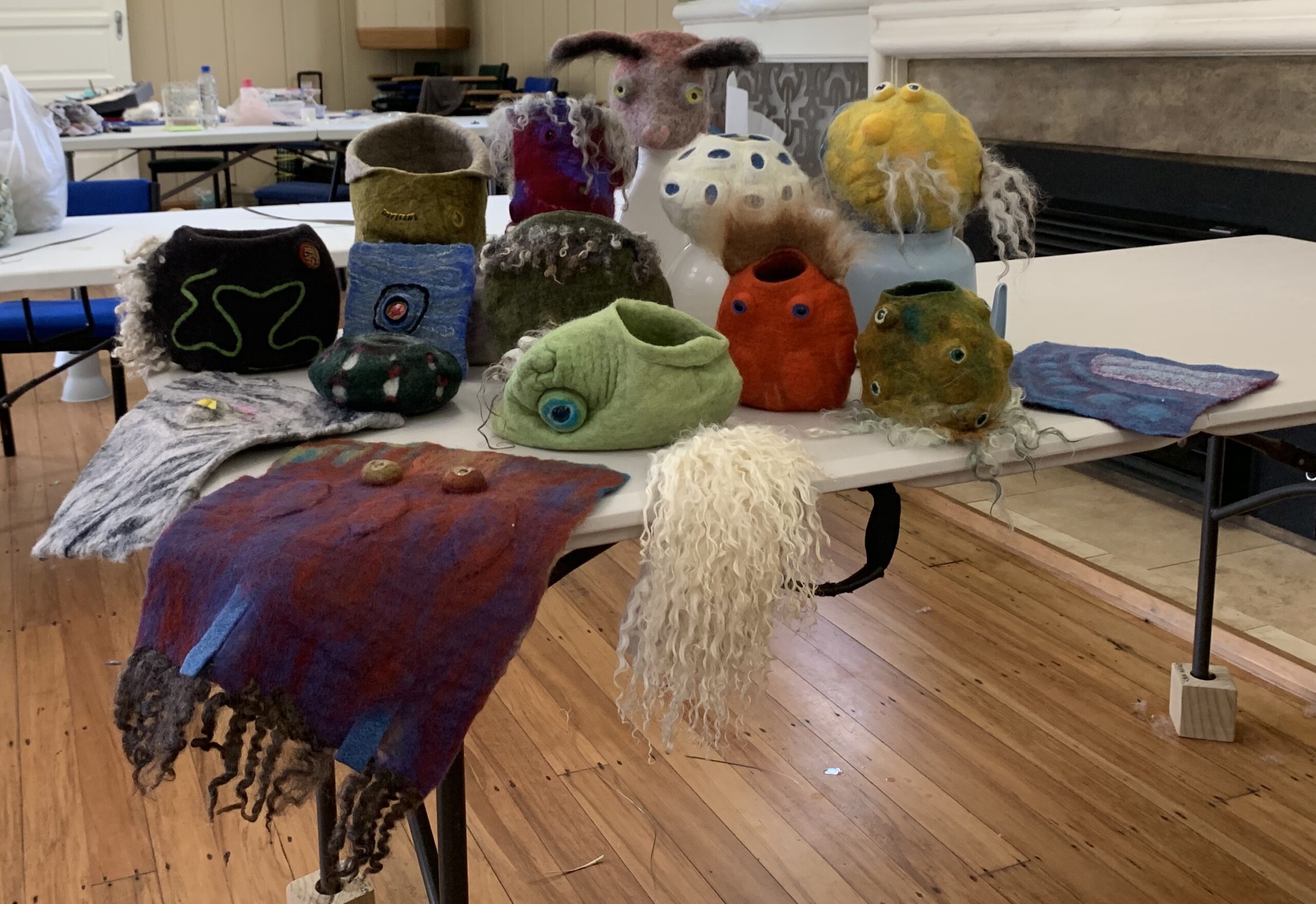
The Auckland Felters 2026 exhibition is now in the final stages of labour, and this time we have midwife (curator) helping us with the delivery. Working with a curator (Matthew) and his installation team has been a new experience for me. In some ways it’s a relief, not worrying about which pieces look good together or figuring out how to hang some of the less conventional creations but the flip side is that we have little control over which pieces get selected and how they are presented. For a control freak, this is very unnerving! 🙂

A new piece for the exhibition

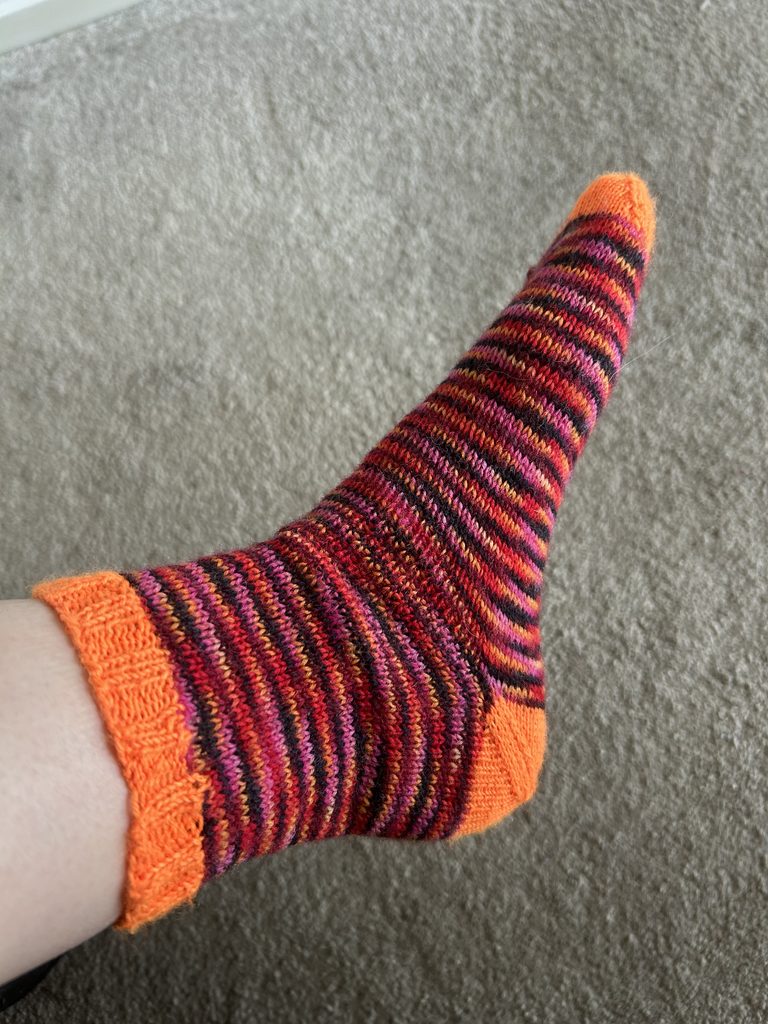
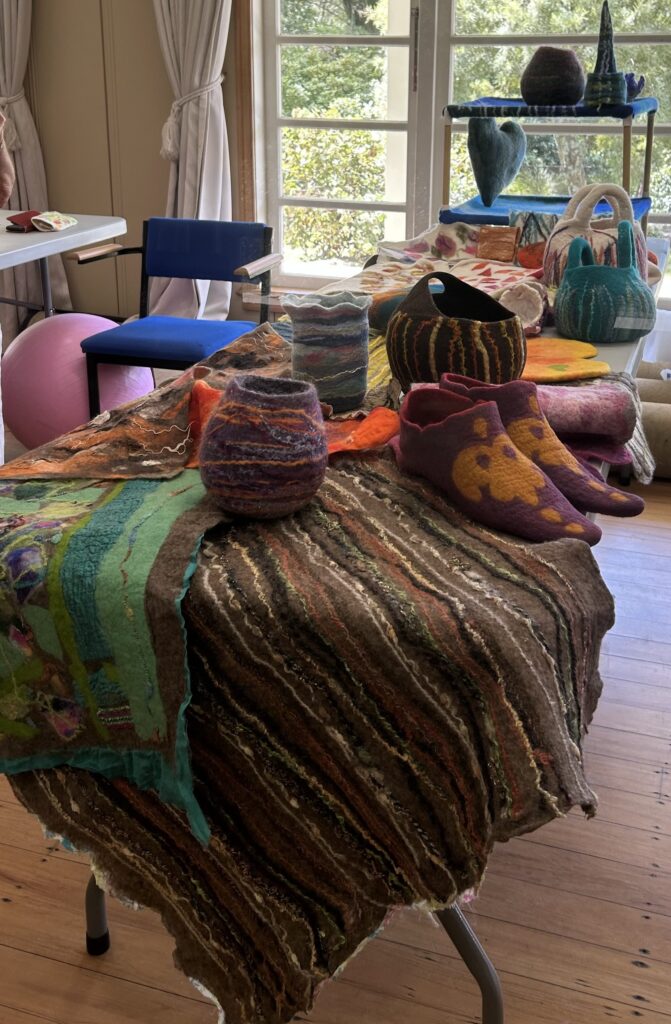
I have been working on a new piece for the exhibition and inviting the readers of my monthly emails to guess what it might be. There were some interesting responses but none were correct. Can you do any better? This is the first image I shared:

Thank you so much for all the poppies!

We have been blown away by the wonderful response to our call for help with making felted poppies. Clare Hocking had the wonderful idea of creating an ANZAC day commemorative installation to fundraise for the Returned Soldiers Association in New Zealand. We all thought her idea was especially touching given that our exhibition open day will be on 25th April (ANZAC Day). The response from felt-makers all around the world and the lovely stories and letters that accompanied many of the poppies has been heart-warming. Sarah and Clare have been hard at work, assembling the 285 poppies into an installation with some felted “barbed wire” made by Jaq Spirrett.

Sorting the poppies by size and colour – the purple ones are in remembrance of the animals who have served in our defence forces.
Sarah and Clare starting hang the poppies on invisible threads.
Clare planning how the felted barbed wire will be entwined through the poppies.

What did you guess my exhibition piece might be?

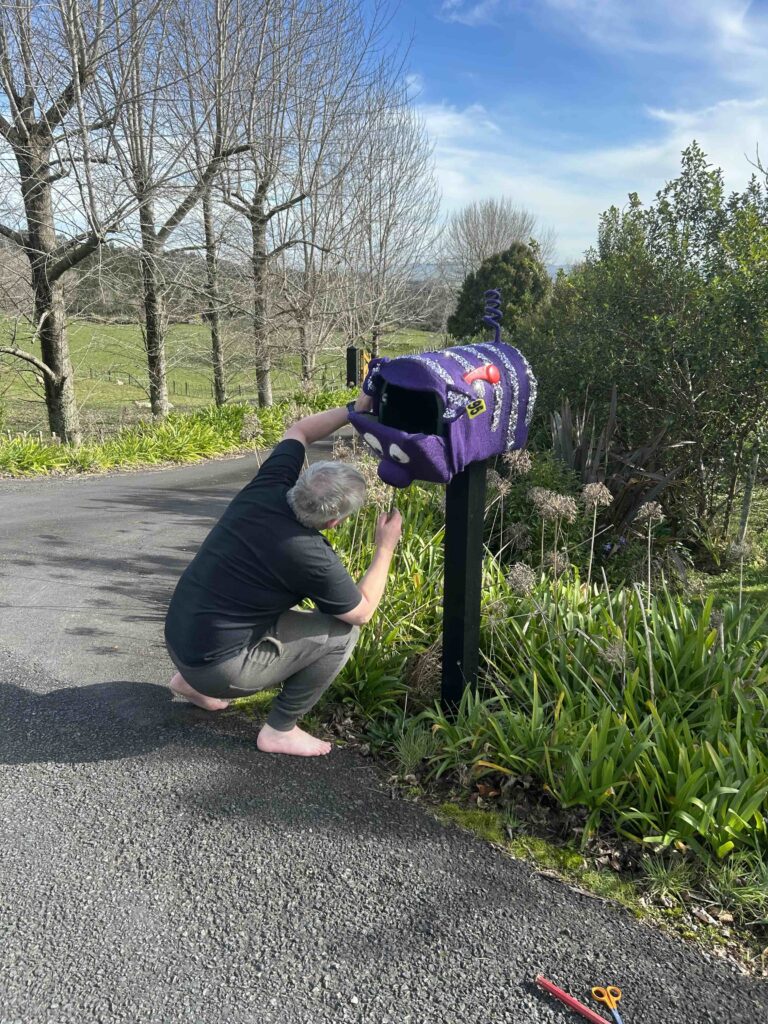
This is the second photo from my newsletters, it’s not too late to change your guess… 😉

Unexpected Benefits from the Poppy Appeal

One of the groups who sent a batch of poppies was Les Hookeuses du Bor’de’lo, from Canada and one of their members, Janice Goguen, reached out to say she was planning to visit Auckland and could we recommend any fibre-related events / activities?

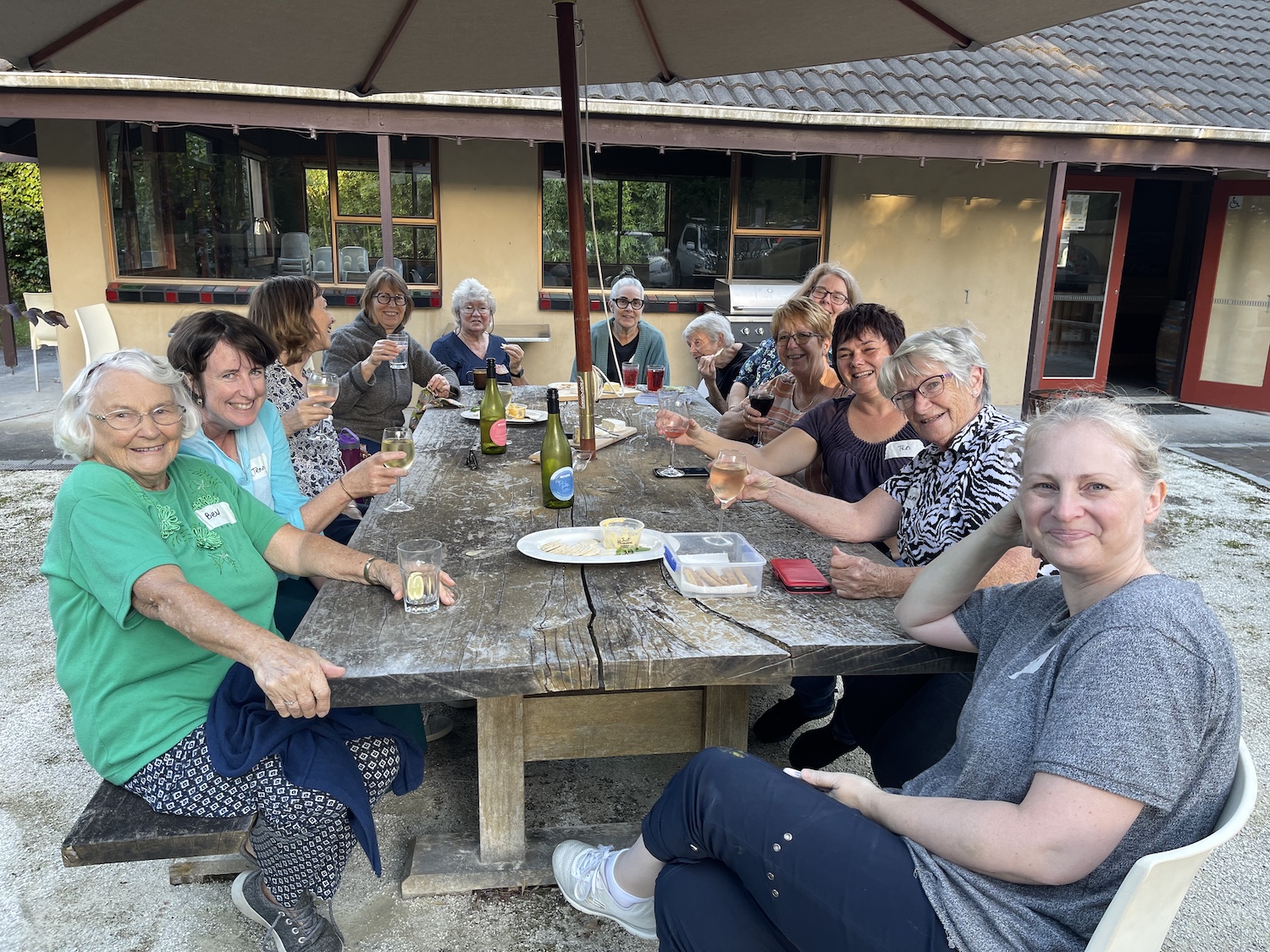
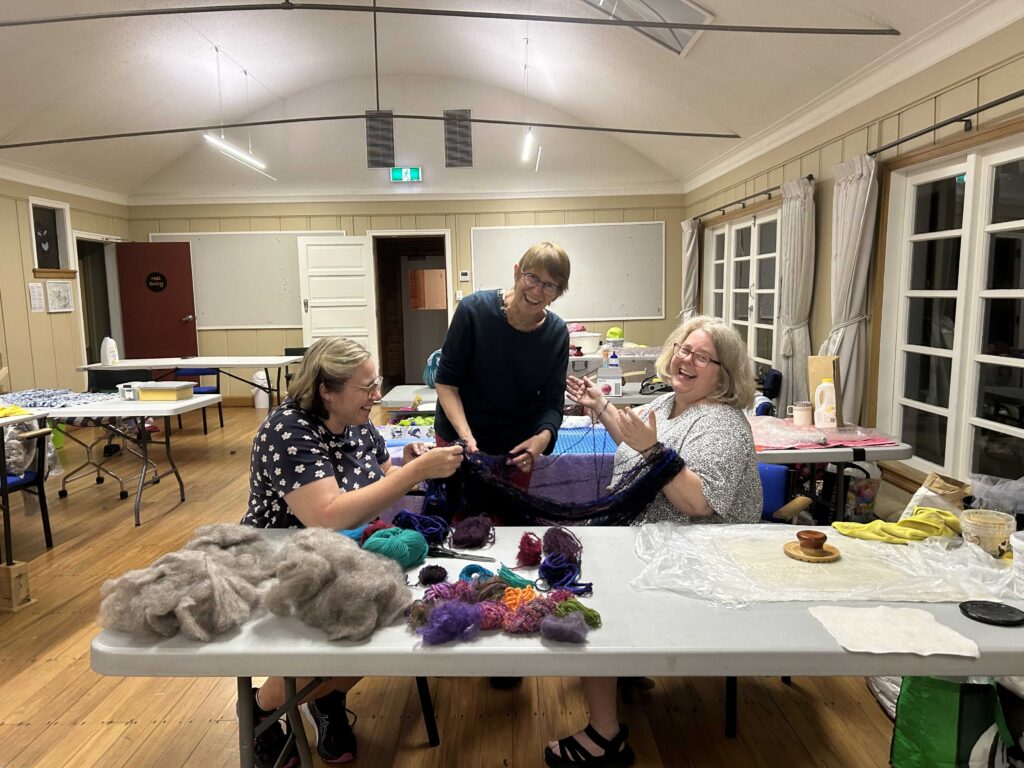
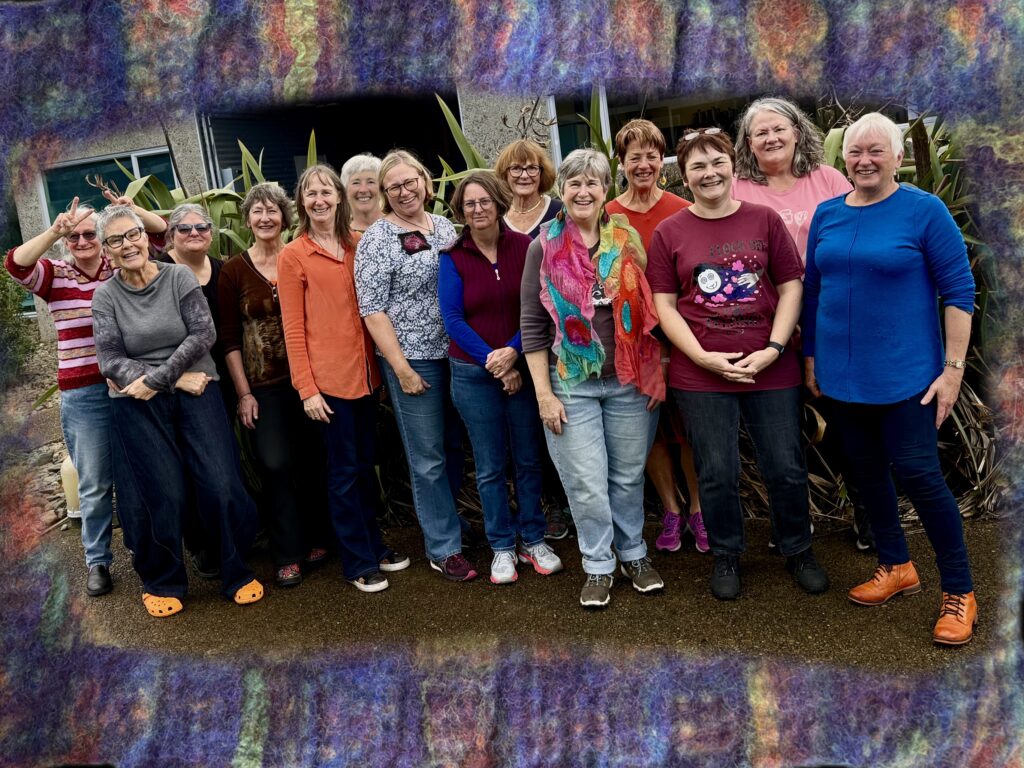
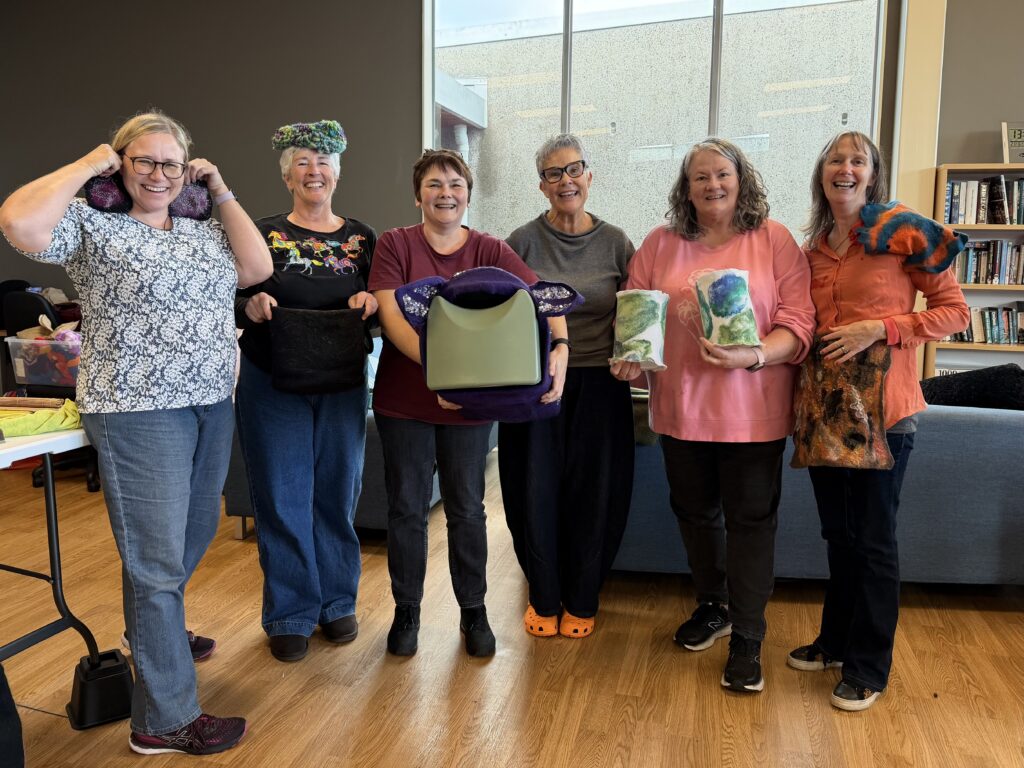
She was in luck (and as it turned out so were we 🙂 )! Auckland Fun Felters were meeting the weekend she would be visiting our fair city and she was warmly welcomed to spend the day with us. We had a wonderful time hosting Janice and she very generously shared her knowledge of Canadian rug hooking. A few of us are already germinating ideas of how to combine rug-hooking with felting… 🙂

Janice demonstrating the rug-hooking technique

The Big Reveal

I confess this piece still isn’t quite finished and I need to get a move on because we start hanging the exhibition a week on Tuesday but this is the last photo in the series….

I hope you can tell what it is now? 🙂 Were your earlier guesses correct?

This piece was made from LOTS of felt ropes and strips of commercial felt that I dyed in several batches because they wouldn’t all fit in my 30 litre tea urn. This was my first attempt to work in this way and I really was making it up as I went along, trying to create the form of the fish over the more structured woven background, it is surprisingly difficult to make curves when the base is so obviously a grid. This is definitely one of those pieces that I am enjoying more now that it is finished! 🙂

My next post will be about the exhibition, stay tuned!

Calling Felt-Makers Near and Far: Help Us Create an Inspiring Installation of Felted Poppies

There are times when making with our hands feels especially meaningful. We would love it if you would like to join us in making this one of those times.

The Auckland Felters group is preparing an exhibition titled Deeply Felt, opening on 21 March and running through to 2 May at Nathan Homestead, Manurewa (Auckland), and we’re inviting felt-makers from around the world to help us create a collaborative installation of felted poppies. The exhibition will encompass ANZAC Day, making this shared work especially poignant. The poppy installation will be used to raise funds for the RSA (Returned Services Association).

Image by freepik

What is ANZAC Day?

ANZAC Day is commemorated each year on 25 April in New Zealand and Australia. It honours all those who have served and continue to serve in the armed forces, and remembers the lives lost through war and conflict. The day began as a remembrance of the ANZAC soldiers who landed at Gallipoli in 1915, and has since grown into a broader day of reflection, respect, and remembrance.

It is a quiet, reflective day — one that feels particularly fitting for an exhibition called Deeply Felt, where the act of making, remembering, and responding through fibre is central.

Why felted poppies?

The poppy is a powerful symbol of remembrance. Interpreted through felt — a material that embodies time, patience, and touch — each poppy becomes a small but heartfelt gesture. Individually they are modest but together they become something deeply moving.

Every contribution will be combined into a larger installation, creating an evocative expression of remembrance through hundreds of poppies, made by many hands.

Who can take part?

Anyone who loves working with fibre.
You don’t need to be a professional felt-maker — all abilities are all warmly welcomed. Each poppy will be unique, and that individuality is part of what will make the final piece so special.

What we’re looking for

  • Hand-felted poppies — wet felted, needle felted, nuno felted, or a combination (they do need to be felted please)
  • Poppies should be predominantly red and approxiately 10-15cm diameter

Please see our simple instructions and ideas for making felted poppies below to help guide you, but there’s plenty of room for personal expression.

How to take part

If you’d like to contribute, please:

  • Make one (or more!) felted poppies – the more the merrier!
  • They will need to be posted to Teri in New Zealand, to arrive by 10th February 2026

Because this is a volunteer-led, fundraising project, we are unfortunately not able to reimburse postage costs or return poppies. All contributions will become part of the installation, and any funds raised through the exhibition will go towards supporting the work of the RSA.

Do you know other feltmakers or belong to a crafting group? Please consider combining your poppies in one parcel to save on postage.

A shared act of making and remembering

This project is about connection — across borders, practices, and experiences — and about using our skills to contribute to something larger than ourselves. Each poppy is a small act of remembrance; together they will form a quiet but powerful presence within the Deeply Felt exhibition.

If you’d like to be involved, we would love to hear from you. Please contact Teri for details of where to send your poppies.


Auckland Felters thank you for considering adding your hands, your wool, and your care to this collaborative work.

How to make wet-felted poppies

If you prefer needle-felting, we have you covered! Our resident needle-felter has prepared another set of instructions just for you! Please visit Sarah’s website here.

1 – Print this template on A4 or US Letter paper (tap on the printer icon), if you don’t have a printer a 20cm / 8″ diameter circle will also work.

2 – Lay your template under a sheet or clear plastic or bubblewrap lay your fibres from the centre out:

3 – Lay out your fibres until you have completed the circle:

4 – Layout your second layer in concentric rings starting from the outside, you probably will not need to add any fibre in the middle as the fibres are already overlapping here from the first layer:

5 – Optional step – you can add some accent colours to a couple of petals, this may be a different shade of red or you can “finger blend” another colour with your main colour.

To “finger blend” two colours, lay a tuft of each colour on top of the other. Pinch at both ends and pull your hands apart.

Lay the pulled tufts on top of each other and keep repeating until you reach your desired level of blending

6 – Lay your accent colour on one or two petals:

7 – Wet out (you might want to remove your template first):

8 – Add a black centre and dots for stamens. These can be cut from prefelt if you have some scraps or the dots can be made by rolling a tiny amount of wool in the palm of your hand:

9 – Push any wispy fibres around the edge towards the middle:

10 – Felt your flower to the prefelt stage using your preferred method; rubbing, rolling, “sanding”, kneading etc. When you do the pinch test the fibres should be holding together:

11 – Full the outer petals – pinch the centre of your flower from the back so the petals point downwards then roll the petals between your hands. This step tightens the felt on the outside of the circle so it starts to form a cup shape:

12 – Make 6 cuts leaving at least 5cm / 2″ of uncut felt at the centre, if you used an accent colour try to cut either side of those petals. This is a good time to trim any pointy bits of felt on your petals too:

13 – Continue fulling the felt by rubbing and kneading it, stopping to stretch and shape the individual petals every 30-60 seconds:

14 – While you are shaping the petals try to overlap them so each one sits a little behind its neighbour:

15 – Rinse and dry in a towel before the final reshape. I let mine dry in a cup or glass so they keep a tighter bud shape.

This is the amount of shrinkage you can expect:

With thanks to Clare and Margaret from Auckland Felters for initiating this collaborative installation and creating the template.